The Emancipation Proclamation: reframing a war to win it
1862
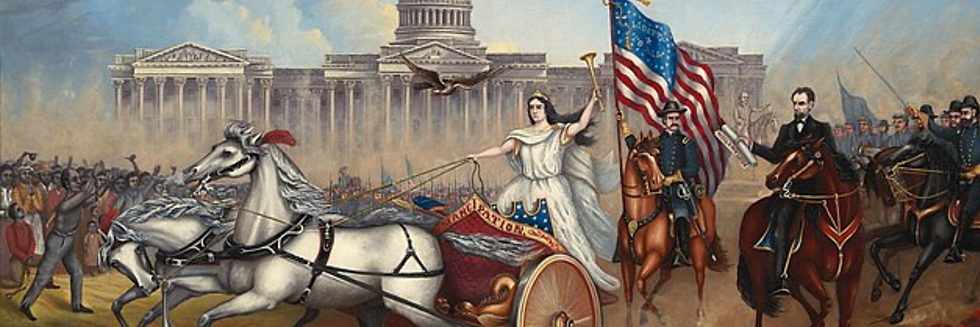
The core dilemma:
Hold the centrist position that had kept the Union coalition together
or
reframe the entire war around emancipation, knowing it would fracture his own base and might not hold legally.
Situation:
Constrained
Objective:
Stabilize
The situation:
The United States in 1861 was literally splitting apart. Eleven southern states had seceded to form the Confederacy, primarily to preserve slavery. Most people expected the war to last months. By mid 1862 it had been going for over a year with no resolution in sight.
The scale was unlike anything America had experienced. Single battles were killing tens of thousands. The Union had advantages in population and industry but could not translate them into decisive victory. The Confederate strategy did not require winning outright, only making the war expensive enough that the North would eventually negotiate a peace leaving slavery intact.
Lincoln had deliberately kept emancipation off the table. The border states, slave holding states that had stayed in the Union, were essential to the war effort. His public position was explicit: this was a war to save the Union, not to end slavery. By summer 1862 that position was no longer sufficient. The war needed a new strategic logic, a harder moral foundation, and a way to close off the diplomatic options that were keeping the Confederacy viable. The question was not whether to move, but when, how, and at what cost to the coalition he had spent a year holding together.

Leadership series of:
Abraham Lincoln
President of the USA during the civil war.
The Strategy
Adapt
Lincoln changed what the war was fought for by launching the emancipation declaration that freed all slaves.
Lincoln had spent the first year carefully managing what the conflict was about. That framing had been deliberate and politically necessary. By mid-1862 he concluded it was also insufficient.
The shift to emancipation was not a change of values, he had always opposed slavery, but a strategic recalculation about what kind of war this needed to become in order to be won. He moved when the conditions justified it, not when the moral case became clearer.
Lincoln waited for a Union military victory before acting, understanding that announcing emancipation after a defeat would look like desperation rather than strategy. Antietam in September 1862 provided the opening. Five days later he issued the preliminary proclamation, giving Confederate states 100 days to return to the Union before it took effect.
The framing was precise. Freeing slaves in Confederate states only meant the border states were not directly threatened, keeping them in the Union. It made European recognition of the Confederacy politically toxic. It encouraged enslaved people in the South to flee or resist, destabilising the Confederate war effort. And it gave the Union cause a moral dimension that made it harder to abandon.
The strategic repositioning and the careful implementation were the same decision. One changed what the war was for. The other made sure it held.
Operational environment
Military.
The Union had superior resources but had failed to translate them into decisive victories. The war was consuming men and money without producing the breakthrough that would justify continued sacrifice. Without a shift in strategic framing, the North's material advantages were not producing the commitment needed to use them.
International.
Britain's textile industry depended on Confederate cotton, making formal recognition of the Confederacy a live political option in London and Paris. A war framed around union was one thing. A war framed around ending slavery was another. European publics would not support a government that recognized a slaveholding state against an emancipating one, and both Lincoln and the Confederate leadership understood this.
Political.
Lincoln was managing two irreconcilable factions simultaneously. Radical Republicans wanted immediate emancipation and were losing patience. Conservatives wanted the war kept strictly about union, fearing that emancipation would fracture the border state coalition. Moving too fast would cost him the border states. Moving too slowly would cost him the moral argument that was becoming central to Northern motivation and international credibility.
Legal.
The Constitution protected slavery in states where it existed. Lincoln had no straightforward authority to abolish it. The Emancipation Proclamation was framed as a wartime military measure, freeing slaves in Confederate states only, which limited its immediate scope but made it legally defensible as an act of war rather than legislation. The precision of the framing was not evasion. It was what made the decision holdable.

People management
Lincoln's primary instrument was timing, not patience but the deliberate management of when things became visible, to whom, and in what sequence. Almost everything in the lead up to the Proclamation was about controlling the architecture around the decision before the decision itself appeared. By the time it landed, most arguments against it had already been foreclosed.
He governed himself under conditions that broke most people around him.
Lincoln suffered from severe depression throughout his life, lost a son during the war, and was under sustained attack from the press, the public, and his own cabinet. His method was specific: he wrote letters he never sent to discharge anger without acting on it, used humor in cabinet meetings to release pressure without surrendering authority, and compartmentalized grief well enough to keep deciding clearly. The emotional discipline was a practice he developed deliberately, not a personality trait he happened to have.
He converted rivals into stakeholders by giving them real authority. Lincoln appointed his most dangerous political rivals to senior cabinet positions, men who had beaten him for the nomination and publicly questioned his competence. He gave them genuine responsibility, which bound them to outcomes they had publicly staked their reputations on. Over time, their success became inseparable from his. He did not convert them through charm. He converted them through shared consequence.
He moved on his own timeline, absorbing pressure from both sides. Radicals demanded immediate emancipation. Conservatives demanded restraint. Lincoln moved when the strategic conditions, military, diplomatic, political, legal, were aligned. The radicals got the outcome. The conservatives got enough time to accept it as military necessity rather than ideological imposition. Neither could claim the decision as their own. Neither could credibly oppose it.
He closed off opposition before the decision arrived.
Before issuing the Proclamation, Lincoln published a public letter stating his overriding priority was saving the Union. Before announcing it publicly, he secured cabinet alignment on timing. Before timing it, he waited for a military victory, Antietam, so the announcement would read as confidence rather than desperation. Each step narrowed the space for opposition. The sequencing was the strategy as much as the decision itself.
Managing himself: holding a position publicly that he intended to change.
Lincoln said publicly that the war was about union, not slavery, while privately concluding that it needed to become about both. He held that gap open long enough for the conditions to justify crossing it. The line between strategic sequencing and dishonesty is whether the delay serves the outcome or protects the leader. Every delay here served the larger goal. That clarity, and the ability to maintain it under pressure, is what made the eventual move possible without appearing cynical.

Key insights & lessons:
Reframing what a conflict is about can be more powerful than winning within the existing frame. Lincoln did not find a way to win the war as it was originally defined. He changed what the war was, and won that instead. The ability to shift the terms of a competition rather than simply trying harder within the existing ones is available in most strategic situations and used in very few. It requires accepting that the framing you built was insufficient, which most leaders are reluctant to do publicly.
A good decision badly timed, badly framed, or badly sequenced can fail as completely as a bad one.
The Proclamation worked because every element around it was controlled as carefully as the decision itself. Lincoln did not simply announce emancipation. He prepared the legal ground, secured the military precondition, aligned his cabinet, and managed the public framing in sequence over months. The decision was the visible act. The architecture around it was the actual work.
Moral and strategic arguments are most powerful when they point in the same direction.
A decision that is both ethically necessary and strategically required is nearly impossible to oppose credibly. Lincoln waited until emancipation was both the right thing and the necessary thing. The combination closed off almost every avenue of legitimate resistance, domestically, internationally, and within his own coalition.
The most consequential decisions are often the ones presented as already made.
Lincoln did not invite debate on the Proclamation once he had decided. He informed his cabinet of the decision and consulted only on timing. Inviting deliberation on a resolved question signals uncertainty and opens opposition that would not otherwise exist. There is a difference between decisions that benefit from counsel and decisions that require conviction to hold. Knowing which is which, and behaving accordingly, is a precision most leaders lack.
Absorbing sustained pressure without letting it distort judgment is a learnable discipline, not a personality trait.
Lincoln was governing a country tearing itself apart while managing personal grief, public contempt, and institutional chaos. He kept deciding well anyway. The practices he used, the unsent letters, the deliberate humor, the compartmentalization, were specific and reproducible. Leaders who can separate their emotional state from their decision making under sustained pressure are rare. They tend to be the ones still standing when it matters most.
Outcome
Lincolns Emancipation Proclamation had both an immediate and long-lasting impact.
It changed the moral character of the Civil War. It strengthened Northern resolve and made Southern diplomacy far more difficult. By framing the conflict around slavery, it also made it politically impossible for European powers to recognize the Confederacy.
By the end of the war, Lincoln helped ensure that emancipation would become permanent. The Thirteenth Amendment to the United States Constitution abolished slavery throughout the United States.
This outcome reflected both political strategy and wartime leadership. Even in the North, emancipation was controversial, yet Lincoln managed to carry it through and secure lasting change.
In the end, Lincoln did not simply win the war as it was originally fought. He reshaped what the war was about, and secured victory on those new terms.