Winning the American Revolution by avoiding defeat
Virginia, US | 1775-1783
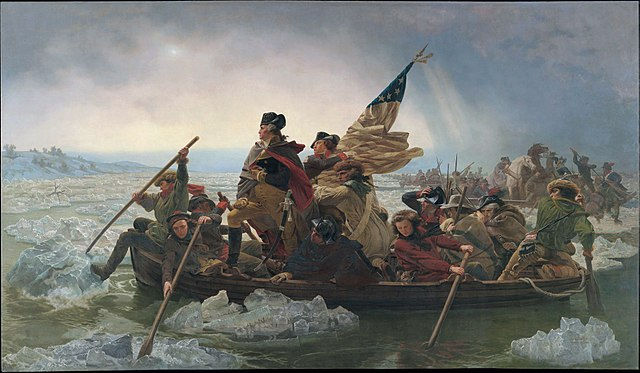
The core dilemma:
Risk a decisive battle that could win the war quickly
or
prolong the war by avoiding irreversible losses.
Challenge
Survival
Power position:
Fragile
The situation:
The Continental Army Washington commanded was not a professional force. It was a loose coalition of militias, short-term recruits, and volunteers facing the British Army, one of the most experienced and best-equipped militaries in the world. Supplies were inconsistent, funding unreliable, and political backing fragile. Soldiers frequently lacked food, pay, and basic equipment, and most served only for limited terms before returning home.
What made this structurally different from most military problems was that Washington could not fix the underlying conditions. He could not compel states to fund the war, could not stop enlistments from expiring, and could not manufacture the professional army the situation seemed to demand. The force he had was perpetually on the edge of dissolution. Defeat in a single major engagement could end not just the campaign but the entire revolutionary project.
The temptation was real and constant: commit to a decisive engagement, win it, and end the war. His officers wanted it. Politicians demanded it. The public expected it. Each month of grinding, inconclusive warfare made the pressure harder to absorb. The harder choice was to treat survival itself as the strategy — to accept that the army's continued existence was the objective, not a means to one.
Leadership series of:
George Washington
Commander in chief of US continental army.
1st President of the U.S.

The Strategy
Restraint
with selective aggression and adaptation
Washington committed to a long war of attrition, preserving the army above all else, even at the cost of territory, momentum, and public confidence. Against a professional force he couldn't match directly, survival was the strategy.
This meant accepting short-term losses that looked like failure. He retreated when others demanded he fight, and held back when pressure mounted for decisive action. At the same time, he understood that pure passivity would erode the army from within. Carefully chosen, limited attacks like Trenton and Princeton were not attempts to win the war. They were signals that winning was still possible, delivered at moments when belief was close to breaking, without exposing the force to irreversible risk.
The restraint and the selective aggression were the same strategy. One kept the army alive. The other kept it willing to fight.
Operational environment
Military asymmetry.
British forces operated from strong coastal bases and major cities, supported by naval dominance and reliable supply lines. American forces were dispersed inland, dependent on local support and difficult to coordinate across distance. Washington could not match British regulars in set-piece battle. Attempting to do so directly risked the kind of decisive defeat that would have ended the war on British terms/
Structural instability.
The Continental Army relied on short-term enlistments, and individual states controlled whether and how their militias served. Washington could not count on the same force from one month to the next. Units disbanded and reformed, soldiers came and went, and continuity was fragile. The army was not a fixed instrument but something he had to continuously rebuild while also using it.
Political constraints.
Congress lacked the authority and resources to centrally supply or direct the war effort. Washington was simultaneously a military commander and a political actor managing the expectations of thirteen states, a Continental Congress with limited power, and a public whose support was contingent on visible progress. Every retreat was a political event as much as a military one.
Morale as a strategic variable.
An army that believed the war could be won would fight differently from one that didn't. Washington understood that belief was not a byproduct of success but a precondition for it. Actions like Trenton and Princeton were not chosen for their strategic impact alone. They were timed and scaled to reset belief at moments when collapse was closest.

People management
Managing himself: holding a long strategy under sustained attack. Washington was not naturally a defensive commander. He wanted to fight. The restraint was chosen and maintained against his own instincts as much as against external pressure. What distinguished him was the ability to hold a long strategy through years of apparent stagnation without letting the appearance of failure alter the underlying judgment. He kept deciding the same way long after most people around him had decided he was wrong.
Washington's method with people was built on two qualities that most leaders treat as opposites: unflinching presence and deliberate restraint.
He stayed with the army through its hardest periods, sharing conditions rather than distancing himself. At the same time, he refused to let the pressure around him translate into reactive decisions. That combination — visible commitment without impulsive action — gave his authority a credibility that formal rank alone could not have produced.
He rebuilt the army continuously rather than commanding a stable one.
Short enlistments, desertion, and poor conditions meant the force was in permanent flux. Washington's task was not to lead a stable institution but to recreate one repeatedly — maintaining enough structure, discipline, and shared identity that it kept functioning despite ongoing turnover. This required constant attention to the human fabric of the force, not just its military disposition.
He manufactured moments of belief at the right intervals.
When morale dropped too far, he did not rely on speeches or exhortation. He created events. Trenton and Princeton were chosen and timed as much for their psychological effect as their military value — visible enough to reset confidence, limited enough not to expose the force to irreversible risk. He understood that belief requires evidence, and that evidence can be engineered.
He absorbed institutional pressure without passing it down. Washington faced constant demands for action from officers, politicians, and the public. He contained that pressure rather than translating it into more aggressive orders. This was not passivity. It required a clear internal model of what the strategy actually was, held firmly enough to resist sustained external pressure from people who outranked him politically and whose frustration was entirely understandable.
He enforced discipline without triggering the desertion he was trying to prevent.
The balance between control and tolerance was precise and consequential. Too much enforcement in an underpaid, underfed, volunteer army would accelerate the very losses he was trying to stop. Too little and the force lost coherence. He calibrated this continuously, without a stable institutional baseline to work from.

Key insights & lessons:
One of the most dangerous pressures is the pressure to act. Washington was constantly pushed toward decisive engagement by people whose frustration was legitimate and whose logic was coherent. He held back not because he lacked the impulse but because he could see that the downside of losing a major engagement was irreversible in a way that continued grinding attrition was not. Leaders who can distinguish between pressure that reflects genuine strategic information and pressure that reflects accumulated anxiety are rare. The ones who cannot tend to make their worst decisions at exactly the wrong moment.
In fragile situations, keeping options open is itself a strategic objective. Washington's overriding goal was to preserve the army's existence as a viable fighting force. This meant accepting outcomes that looked like failure — retreats, lost territory, public criticism — in order to avoid the one outcome that could not be recovered from. The willingness to accept bad outcomes in order to avoid catastrophic ones requires a clear internal model of what actually cannot be lost, held consistently enough to survive the appearance of defeat.
Belief is a resource that requires active management.
An army that no longer believes the war can be won will stop fighting well before it is actually defeated. Washington understood that confidence does not maintain itself, it degrades under sustained pressure unless something periodically refreshes it. Trenton was not primarily a military victory. It was a belief intervention, scaled and timed to produce maximum psychological effect at minimum strategic risk.
Consistency over time creates a form of authority that decisions alone cannot.
Washington's credibility with the army did not come primarily from any single act. It accumulated through years of showing up the same way — present, controlled, not visibly rattled by what would have rattled anyone. In conditions of sustained uncertainty, that kind of behavioral consistency becomes a stabilizing force in itself. People calibrate their own responses partly by watching how the leader responds. A leader who holds steady gives everyone else permission to hold steady too.
Outcome
The army survived long enough for the balance of the war to shift
Washington’s approach did not produce steady battlefield success, but it prevented collapse. His strategy was defined by restraint, preserving the army, avoiding decisive defeat, and extending the conflict. At the same time, he acted decisively at key moments to sustain morale and maintain credibility.
Crucially, he sustained this approach over years of hardship and limited progress. By consistently showing up, he held the army together long enough for British costs to rise and foreign support, especially from France, to shift the balance.
Victory did not come from battlefield dominance alone, but from maintaining a viable position until conditions made it possible.
Questions to ask yourself
1. Where in your current situation are you resisting the pressure to act decisively when holding back is actually the stronger move? What would it cost you to keep waiting?
2. What is the essential thing you cannot afford to lose? Are the decisions you are making right now protecting it or putting it at risk?
3. Who around you is pushing for a more aggressive approach than you think is wise? What do they know that you might be missing, and what do you know that they are not seeing?